
The 8-Circuit Model of Consciousness
An Integrative Framework for Psychedelic-Assisted Therapy
Develop a more complete framework for understanding human development, psychological conditioning, psychedelic experiences, non-ordinary states of consciousness, and intentional transformation.
This self-paced professional training introduces the 8-Circuit Model of Consciousness as an applied framework for psychedelic preparation, facilitation, assessment, and integration.
What is the 8-Circuit Model of Consciousness?
The 8-Circuit Model is a developmental and phenomenological framework for understanding how human beings organize perception, emotion, behavior, identity, meaning, and consciousness.
Initially developed through the work of Timothy Leary and later expanded by Robert Anton Wilson and Antero Alli, the framework has been further developed by Dr. Rachel Turetzky and Dr. Douglas S. Wingate through their writing, research, clinical experience, and applied work with psychedelic and non-ordinary states.
Survival, safety, and embodiment
Foundational responses related to physical security, trust, and biological orientation.
Emotion, power, and relational territory
Patterns of affect, dominance, submission, boundaries, and interpersonal positioning.
Language, cognition, and symbolic thought
The conceptual and linguistic systems through which experience becomes organized.
Identity, culture, and social conditioning
Personal identity, moral frameworks, social roles, and inherited cultural programming.
Sensory awareness and embodied intelligence
Expanded sensitivity to bodily experience, pleasure, presence, and sensorimotor awareness.
Intentional metaprogramming & re-imprinting
The capacity to observe, evaluate, and influence the programs shaping experience.
Transpersonal memory and archetypal experience
Experiences involving ancestral, collective, synchronistic, and archetypal material.
Ego dissolution and non-dual awareness
Mystical, non-dual, and unitary states that challenge ordinary boundaries of identity.
Psychedelic experience rarely fits inside one theory.
Psychedelic and non-ordinary states can affect every dimension of human experience.
A single session may involve survival responses, attachment patterns, emotional memories, changes in body awareness, symbolic imagery, identity shifts, archetypal material, ancestral themes, mystical experiences, ego dissolution, and non-dual awareness.
These experiences can be difficult to understand through a single psychological theory or diagnostic lens.
The 8-Circuit Model provides an integrative map for organizing the biological, psychological, developmental, somatic, social, cognitive, and transpersonal dimensions of consciousness.
Through this training, you will learn to identify the different layers of an expanded-state experience, ask more precise questions, and select frameworks that support responsible preparation, facilitation, reflection, and integration.
What is metaprogramming?
A psychological program is a learned pattern that shapes how a person perceives, interprets, feels, behaves, and relates.
Metaprogramming is the practice of becoming aware of these patterns and developing greater choice in how they are evaluated, reinforced, revised, or replaced.
Psychedelic and expanded states may temporarily increase psychological flexibility and make established patterns more visible.
The framework helps practitioners explore
A structured path through theory, assessment, practice, and ethics.
The curriculum moves from the historical foundations and architecture of the model into assessment, psychedelic preparation, facilitation, integration, and ethical practice.
Foundations of the 8-Circuit Model
Origins, historical lineage, development, and contemporary applications of the 8-CM.
Circuit 1 - Somatic Intelligence
Foundational responses related to physical security, trust, and biological orientation.
Circuit 2 - Emotional Intelligence
Patterns of affect, dominance, submission, boundaries, and interpersonal positioning.
Circuit 3 - Symbolic Intelligence
The conceptual and linguistic systems through which experience becomes organized.
Circuit 4 - Social Intelligence
Personal identity, moral frameworks, social roles, and inherited cultural programming.
Circuit 5 - Sensory Intelligence
Expanded sensitivity to bodily experience, pleasure, presence, and sensorimotor awareness.
Circuit 6 - Metaprogramming Intelligence
The capacity to observe, evaluate, and influence the programs shaping experience.
Circuit 7 - Collective Intelligence
Experiences involving ancestral, collective, synchronistic, and archetypal material.
Circuit 8 - Unitive Intelligence
Mystical, non-dual, and unitary states that challenge ordinary boundaries of identity.
Circuit Zero & Pre/perinatal Intelligence
Prenatal and perinatal influences in development, health, and perspective.
Chapel Perilous: Ontological Shock & Spiritual Emergencies
Navigating the dark night of the soul and difficulties that may arise with non-ordinary and emergent experiences.
Circuit Balancing & Other Systems
Verticality and interrelational dynamics between circuits, exploration of other consciousness models and systems of thought.
Metaprogramming In Theory & Practice
Applying the pre-programming, programming, hermit, and integration phases to support meaningful change.
Applications In Psychedelic Work
How to apply this model in psychedelic experiences and practice.
Move from conceptual understanding to applied practice.
Map complex psychedelic experiences
Identify circuit-specific themes within psychedelic, ketamine, mystical, transpersonal, and other non-ordinary states.
Strengthen case conceptualization
Organize biosurvival, emotional, cognitive, relational, somatic, metacognitive, archetypal, and transcendent material.
Improve preparation
Recognize belief structures, expectations, conditioning, intentions, and psychological patterns shaping an experience.
Support integration
Translate insights into changes in behavior, relationships, identity, embodiment, and meaning.
Work with belief flexibility
Apply concepts of Altered Beliefs Under Psychedelics (ALBUS) to understand belief activation, relaxation, revision, and reinforcement.
Differentiate presentations
Develop discernment around distress, spiritual emergence/emergency, archetypal material, and anomalous experiences.
Select circuit-specific practices
Use assessment strategies, re-imprinting methods, integration frameworks, and metaprogramming principles.
Strengthen ethical practice
Apply informed consent, harm reduction, scope, safety, and mandatory reporting.
A complete professional introduction to the 8-Circuit Model.
Enrollment includes structured self-paced instruction, applied frameworks, and the required pathway toward the Certified Metaprogrammer credential.
CMPr credential and continuing education
Complete the certification requirements to earn the Certified Metaprogrammer credential. This program is approved for 13 CE credits for eligible mental healthcare providers.
Experience the course before you enroll.
Open a free preview from The 8-Circuit Model of Consciousness and get a direct feel for the course environment, teaching approach, and presentation of the material.
Clinically current, historically grounded, and interdisciplinary by design.
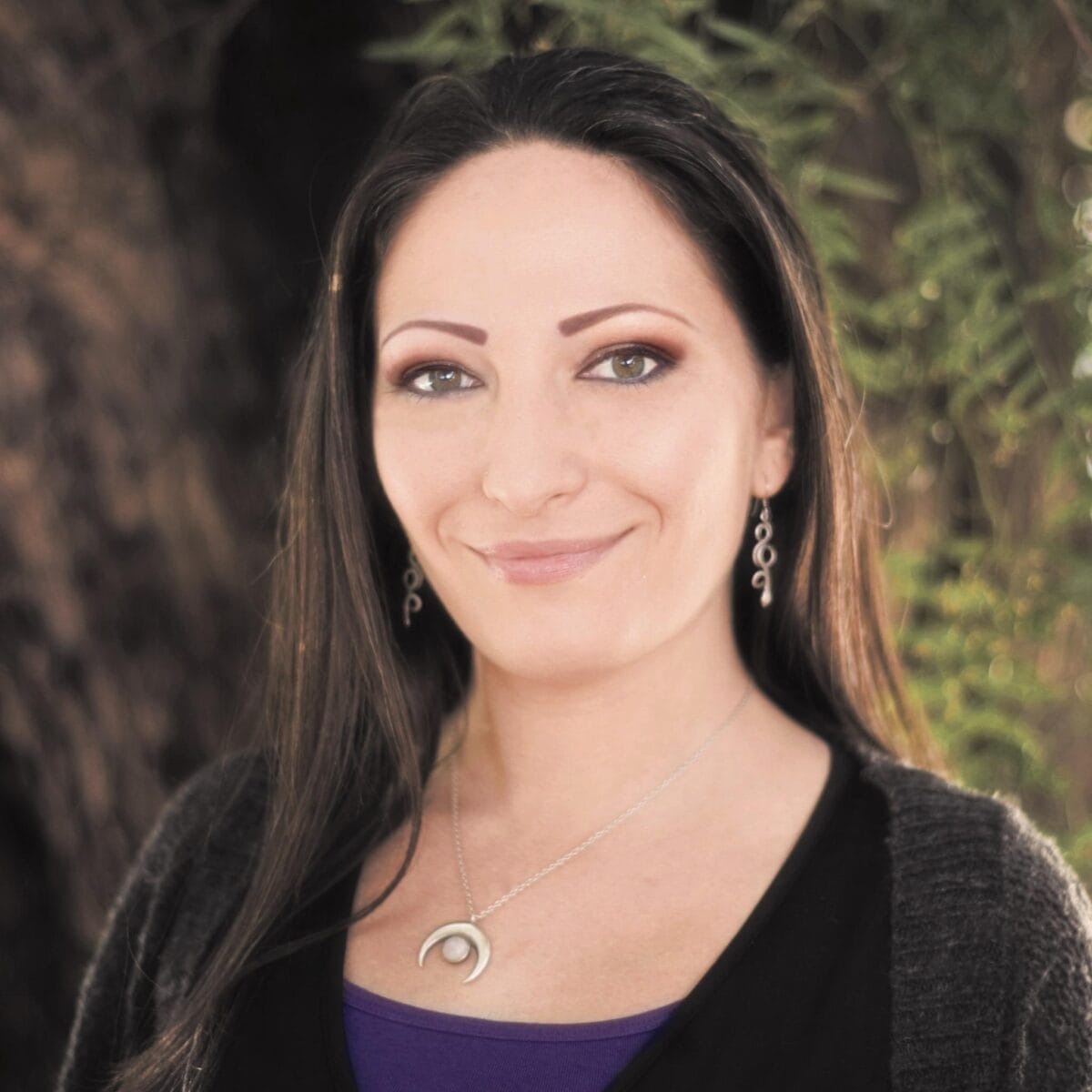
Rachel Turetzky, PhD
Dr. Turetzky is a psychedelic researcher, ketamine-assisted therapist, educator, and co-developer of the contemporary 8-Circuit Model. Her work includes phenomenological analysis of Rick Strassman's bedside notes from his landmark DMT research, and nearly 15 years of involvement working with MAPS on their clinical trials examining MDMA-assisted therapy for PTSD.
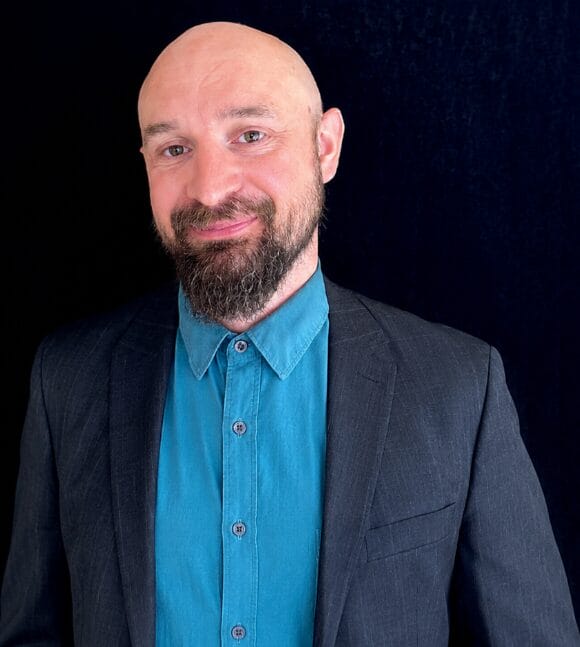
Douglas S. Wingate, DTCM
Dr. Wingate is an educator, integrative practitioner, and co-developer of the contemporary 8-Circuit Model. His experience includes integrative and psychedelic-assisted neurorehabilitation, Traditional Chinese Medicine, acupuncture, and active work as a state-licensed psilocybin facilitator.
Built for people working at the edge of psychology and consciousness.
The training is especially relevant for professionals supporting psychedelic-assisted therapy, ketamine treatment, regulated psychedelic services, intensive contemplative practice, breathwork, spiritual emergence, mystical experiences, or other psychospiritual and non-ordinary states.
Advanced students and members of the general public may also enroll.
The curriculum includes clinically oriented concepts and professional applications.
Study on your schedule.
Self-paced online course and the pathway toward the Certified Metaprogrammer credential. Payment plans available at checkout
Questions before enrolling.
Is the course fully online?
Yes. The course is delivered asynchronously and can be completed according to your own schedule.
How long does the course take to complete?
The course includes 14 video lessons, with each video ranging from approximately 35 to 90 minutes. There are multiple-choice quizzes between each lesson that must be passed before moving on to the next lesson, as well as required reading assignments. The course is self-paced, so completion time varies according to each participant’s schedule, professional background, and depth of engagement with the material.
Do I need prior knowledge of the Eight-Circuit Model?
No. The course begins with the foundations and progresses into advanced theoretical and applied material.
Do I need to be a licensed clinician?
No. The course is designed primarily for mental health professionals, healthcare practitioners, facilitators, coaches, researchers, and educators. Serious students of consciousness may also enroll.
Is this relevant to psychedelic-assisted therapy and ketamine work?
Yes. The curriculum addresses preparation, facilitation, integration, phenomenology, belief revision, ethics, harm reduction, clinical discernment, and the psychological, somatic, symbolic, and transpersonal dimensions of psychedelic and other non-ordinary experiences.
Is the Eight-Circuit Model a diagnostic system?
No. It is an integrative meta-model. Clinical diagnosis remains governed by established diagnostic systems, professional training, ethical standards, and applicable laws.
Are continuing education credits available?
Yes. This course offers 13 continuing education credits for eligible health professionals.
Continuing education credits for psychologists are provided by the Spiritual Competency Academy (SCA), which is sponsoring this program. The Spiritual Competency Academy is approved by the American Psychological Association to sponsor continuing education for psychologists. SCA maintains responsibility for this program and its content.
The California Board of Behavioral Sciences accepts CE credits for LCSW, LPCC, LEP, and LMFT license renewal for programs offered by continuing education sponsors approved by the American Psychological Association.
LCSWs, LPCCs, LEPs, LMFTs, and other professionals outside California should contact their state licensing board to confirm whether it accepts credits from programs offered by APA-approved continuing education sponsors.
SCA is approved by the California Board of Registered Nursing as provider CEP16887 for licensed nurses in California. California registered nurses must retain their certificate of attendance for four years after completing the course. Nurses outside California should confirm acceptance with their licensing boards.
For questions about your certificate, course content, logistics, or participant support, contact Mikha at vital@psychedelicstoday.com .
For questions about whether APA continuing education credits are valid for your license, contact your licensing board directly. For general questions about APA continuing education, contact SCA at ce@spiritualcompetencyacademy.com .
How is this different from reading the books?
The course provides structured instruction, faculty explanation, assessment strategies, guided exercises, professional applications, knowledge assessments, and a pathway toward earning the CMPr credential, with 13 CE credits available for eligible health professionals.
Can I use CMPr after my name?
Participants who successfully complete all certification requirements may use the CMPr designation according to the program’s credential-use guidelines.
Does this certification authorize psychedelic therapy or facilitation?
No. Legal authorization depends on professional licensing, training requirements, local laws, and the jurisdiction in which the participant practices.
A framework for consciousness, transformation, and responsible psychedelic practice.
Psychedelic and expanded states can reveal material that is biological, developmental, emotional, relational, cognitive, somatic, symbolic, archetypal, and transpersonal. Learn to recognize these dimensions and understand how they interact.
Disclaimer
-
Disclaimer
This course in no way promotes, condones, or facilitates illegal activity. This course is strictly for educational purposes only. Please be aware that most psychedelic substances are illegal in many countries. By enrolling into this program, you are agreeing that Psychedelics Today takes no responsibilities for your actions.
This course does not provide credentials or training for therapists, coaches, and clinicians to provide psychedelic-assisted psychotherapy services. These services are largely illicit in many regions.
Informed Consent
Please be aware that this course is for educational purposes only. This is not a substitute for traditional psychotherapy or medicine. This course is designed to provide education from our personal and professional experiences. If you are experiencing significant issues, please seek medical attention.
Limitations of course
The exercises in this course are oriented towards personal and spiritual development. The techniques or modalities are in no way a replacement for traditional therapy. Much of the information in this course could be applied to on-going therapy if you are currently utilizing mental health services.
We believe that providing education, peer-support, and harm reduction is important for this field.
By enrolling in this program, you are agreeing that you understand the purpose and limitations of this course.
Looking forward to taking this journey with you!